
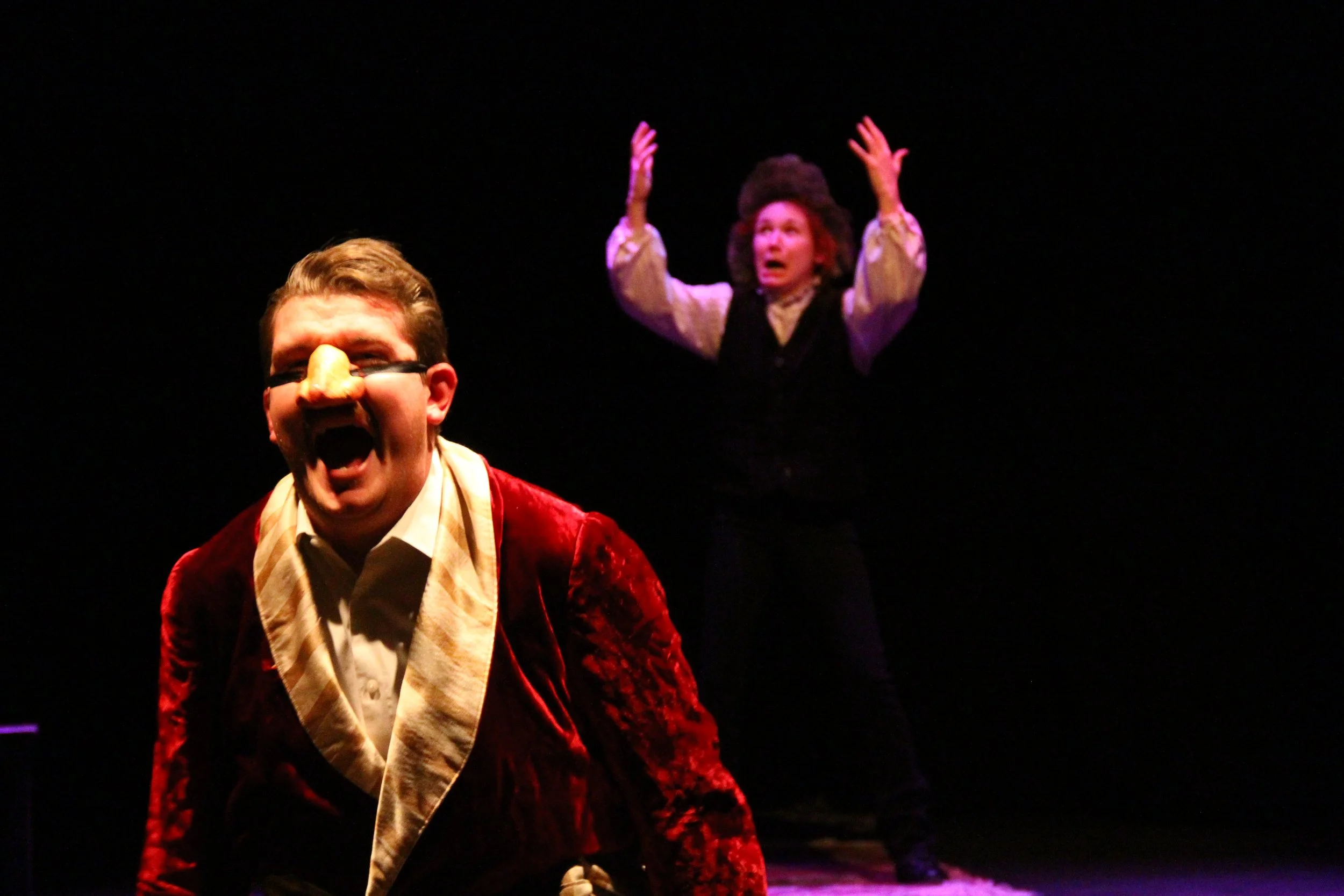
The Nose
Adapted from Nikolai Gogol by Dane Eissler
with music & lyrics by Dane Eissler & Tyler Garamella
January 2017
The Latvian Society Theater
An original musical adaptation of a zany Gogol classic.
Marking Dane Eissler’s EgoPo directing debut, The Nose is a fast-paced, absurd, slapstick comedy… with music! A troupe of young, angry workers take over EgoPo’s midseason salon in an act of socio-political theater revolution (even the servers are in on it) to tell a story of political corruption, classism, and the plight of the proletariat at the hands of the foolish elite. Audiences drank vodka and ate Russian and pierogies, and be ready for the action to invade the audience in this cabaret-style event.
Creative Team
Dane Eissler … Director/Production Design
Tyler Garamella … Music Director
Katie Kiessling … Choreographer
Eric Baker … Lighting Designer/Production Manager
Abby Leyh … Stage Manager
Dave Garrett Saraffian … Production Photos
Cast
Emily Schuman … Narrator
Andrew Clotworthy … Kovalyov
Jenna Kuerzi … Ivan the Barber/Ivan the Footman/The Nose
Evan Raines … Policeman/Clerk
Tori Mittelman … Praskovya/Alexandra
Michael Patrick Pliskin … Inspector-General/Mrs. Podtochin
Kelly Filios … Doctor
with
Emily McHale, Abby Lynn, Kristy Joe Summers, Colleen Knoblock, Heather Ridley, & AJ Klein
About Nikolai Gogol
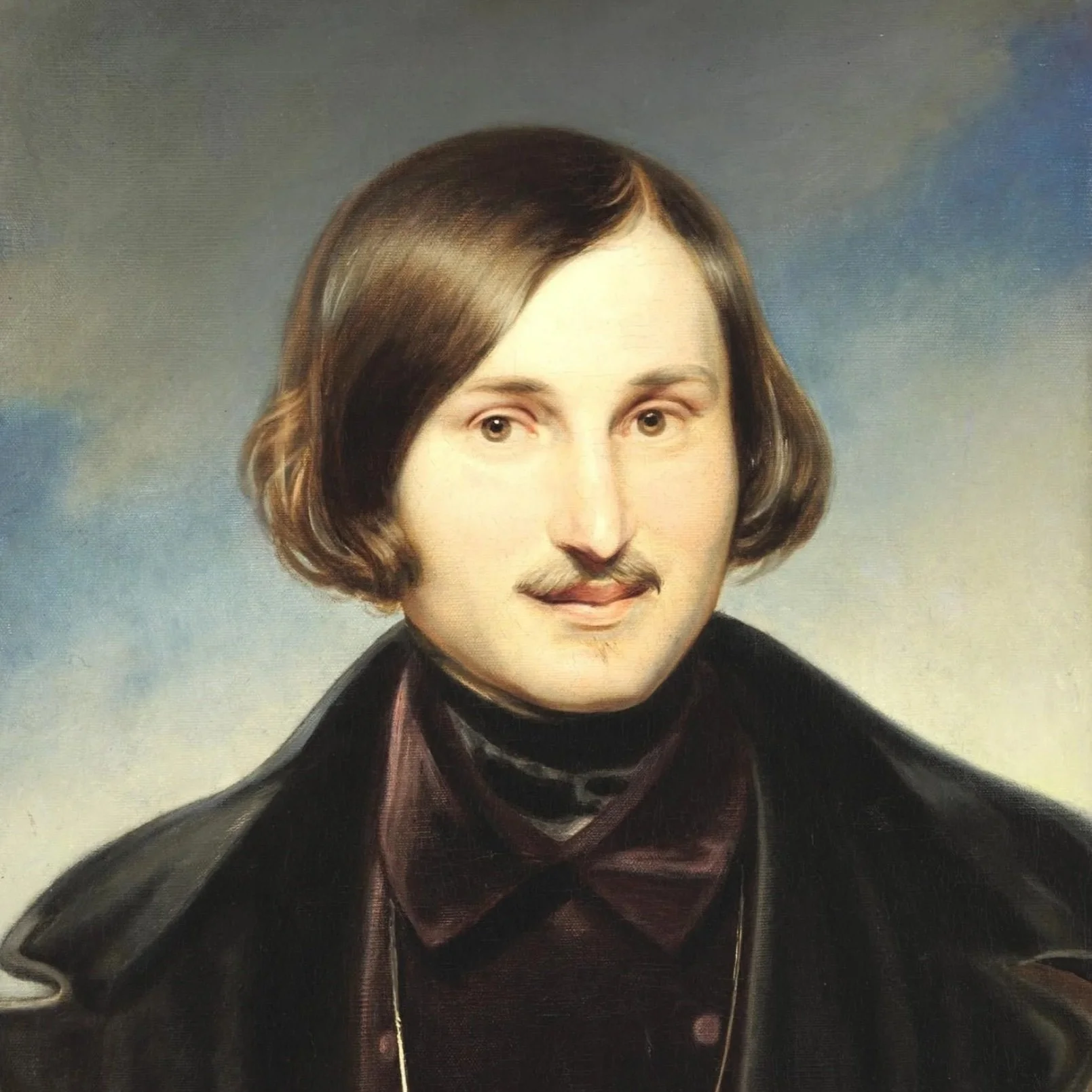
Nikolai Vasilyevich Gogol (March/April 1809 – February/March 1852) was a Russian novelist, short-story writer, and playwright of Ukrainian origin.
Gogol used the grotesque in his writings, for example in his works "The Nose", "Viy", "The Overcoat", and "Nevsky Prospekt". These stories, and others such as "Diary of a Madman", have also been noted for their proto-surrealist qualities. According to Viktor Shklovsky, Gogol used the technique of defamiliarization, whereby a writer presents common things in an unfamiliar or strange way so that the reader can gain new perspectives and see the world differently. His early works, such as Evenings on a Farm Near Dikanka, were influenced by his Ukrainian upbringing, Ukrainian culture and folklore. His later writing satirised political corruption in contemporary Russia (The Government Inspector, Dead Souls), although Gogol also enjoyed the patronage of Tsar Nicholas I, who liked his work. The novel Taras Bulba (1835), the play Marriage (1842), and the short stories "The Tale of How Ivan Ivanovich Quarreled with Ivan Nikiforovich", "The Portrait", and "The Carriage" are also among his best-known works. Many writers and critics have recognized Gogol's deep influence on Russian, Ukrainian and world literature.