

Rockaby
By Samuel Beckett
March 2021
Through Residential Windows
An intensely intimate performance viewed through glass.
This socially-distanced performance took place between individual spectators and a single actor through a closed window of a private home in your choice of three locations across the city. Alone, audience members arrived at a street corner and were guided to a private residence where a single chair awaited, facing a window shrouded by blinds. After taking a seat and putting on headphones, the blinds slowly rose to reveal a woman inside, swaying in her rocker. Her thoughts, in the form of Beckett’s text, enter directly into audiences’ ears, allowing their mind and hers to merge. In EgoPo’s radically intimate version of this famed avant-garde classic, solo spectators witnessed a haunting and hypnotic ten-minute journey of birth, death, and isolation.
Show sponsored by the Judith Charles Memorial Fund
Artists sponsored by The Charlotte Cushman Foundation, Dr. RJ Wallner, Rebecca Abgott, & Dr. Stephanie Creary
Creative Team
Lane Savadove & Damien J. Wallace … Director
Dane Eissler … Production Designer/Production Manager
Chris Sannino … Sound Designer & Engineer
Jamel Baker … Stage Manager
Jordan Chester … Assistant Stage Manager
Kylie Westerbeck … Production Photos
Cast
Melanie Julian, Karen Vicks, & Cathy Simpson
About Samuel Beckett
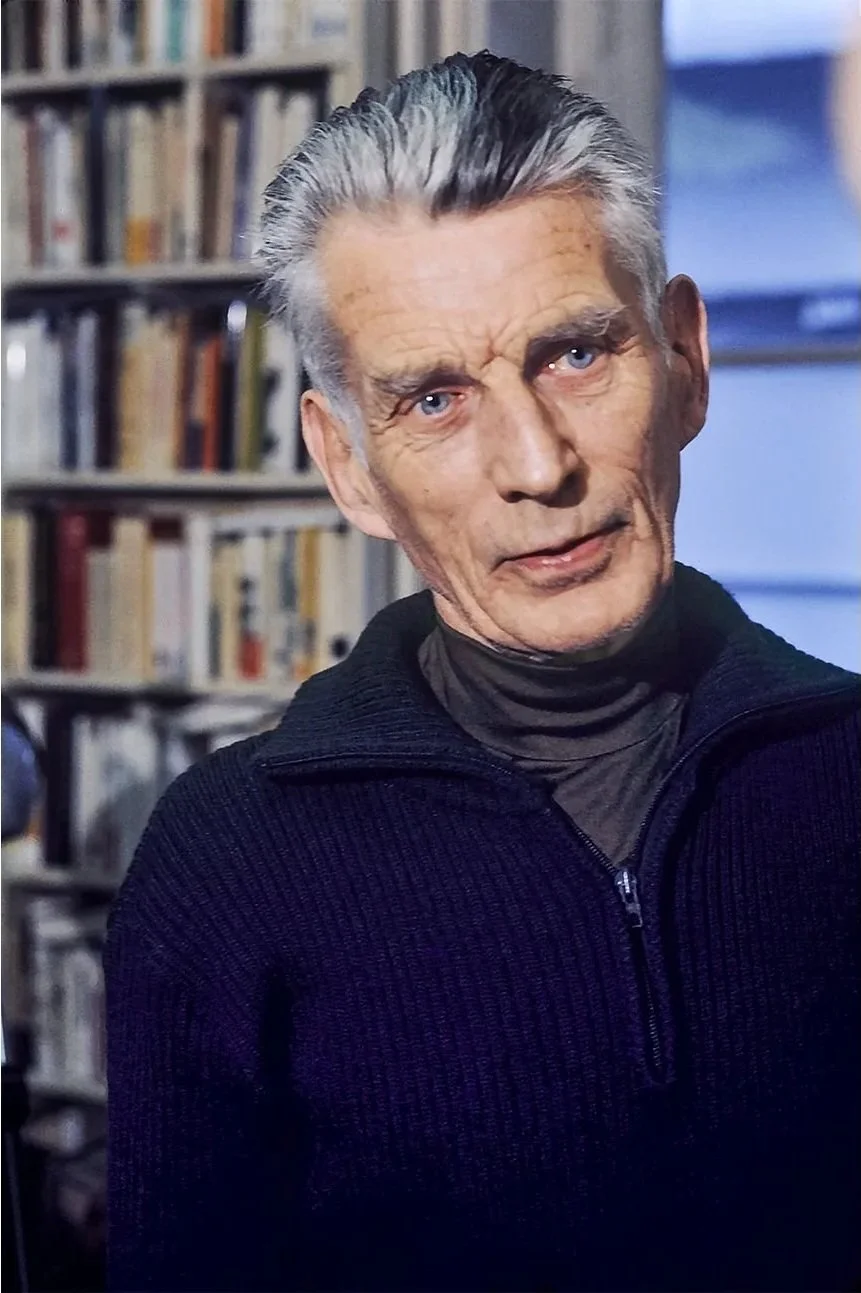
Samuel Barclay Beckett (13 April 1906 – 22 December 1989) was an Irish playwright, novelist, and poet.
Written in both English and French, his literary and theatrical works feature bleak, impersonal, and tragicomic episodes of life, coupled with black comedy and literary nonsense. Beckett is widely regarded as one of the most influential and important writers of the 20th century, credited with transforming modern theatre. As a major figure of Irish literature, he is best known for his tragicomedy play Waiting for Godot (1953).
For his foundational contribution to both literature and theatre, Beckett received the 1969 Nobel Prize in Literature, "for his writing, which—in new forms for the novel and drama—in the destitution of modern man acquires its elevation."