

Anna
an adaptation of Leo Tolstoy’s Anna Karenina
by Brenna Geffers and the Ensemble
March 2017
The Latvian Theater Society
Literature’s greatest heroine comes to new life.
Tolstoy’s sweeping Russian epic is transformed into a make-shift travelling show by a wandering theater troupe armed with a collection of rickety antiques and instruments. They perform this story, set in the shifting landscape of Imperial Russia, to seek refuge from their own unsettling world. You are invited on their journey, and Anna's, as they travel together toward the story's unavoidable end.
Creative Team
Brenna Geffers … Creator/Director
Aaron Cromie … Scenic Co-Designer
Joe Wozniak … Scenic Co-Designer/Props Designer
Natalia de la Torre … Costume Designer
Dom Chacon … Lighting Designer
Lucas Fendlay … Sound Designer
Amanda Coffin … Technical Director
Evelynn Deus … Stage Manager
Nick Ware … Assistant Stage Manager
Eric Baker … Master Electrician/Production Manager
Dave Garrett Saraffian … Production Photos
Cast
Maria Konstantinidis
Lee Minora
Carlo Campbell
Amanda Schoonover
Colleen Corcoran
Andrew Carroll
Shamus McCarty
Arlen Hancock
About Leo Tolstoy
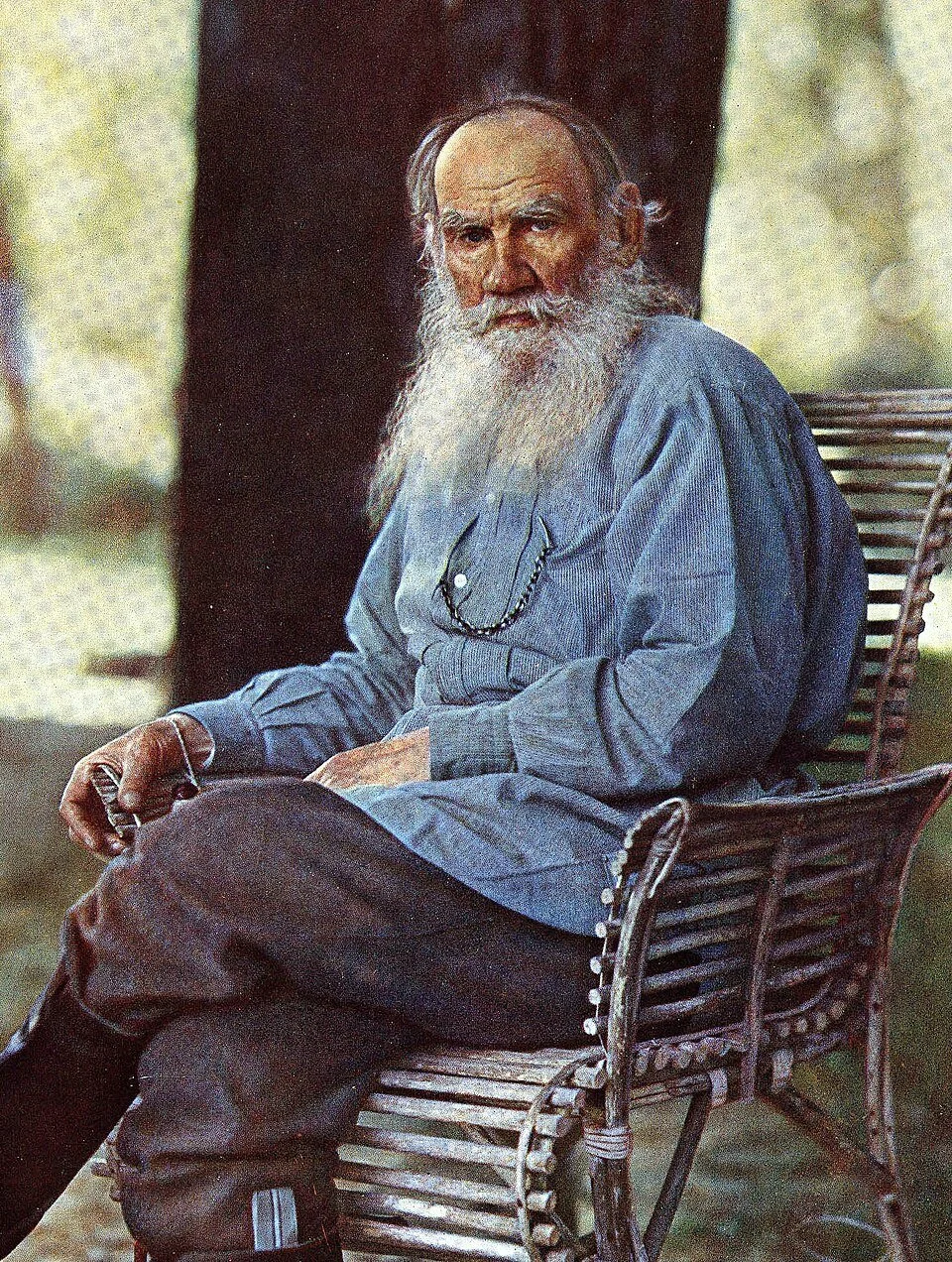
Count Lev Nikolayevich Tolstoy (September/August 1828 – November 1910), usually referred to in English as Leo Tolstoy, was a Russian writer. He is regarded as one of the greatest and most influential authors of all time, having written such classics as War and Peace (1869), Anna Karenina (1878), and Resurrection (1899), which is based on his "youthful sins", often cited as pinnacles of realist fiction and three of the greatest novels ever written.
Tolstoy received praise from countless authors and critics, both during his lifetime and after. Virginia Woolf called Tolstoy "the greatest of all novelists", and Gary Saul Morson referred to War and Peace as the greatest of all novels. He received nominations for the Nobel Prize in Literature every year from 1902 to 1906 and for the Nobel Peace Prize in 1901, 1902, and 1909. Tolstoy never being awarded a Nobel Prize remains a major Nobel Prize controversy.